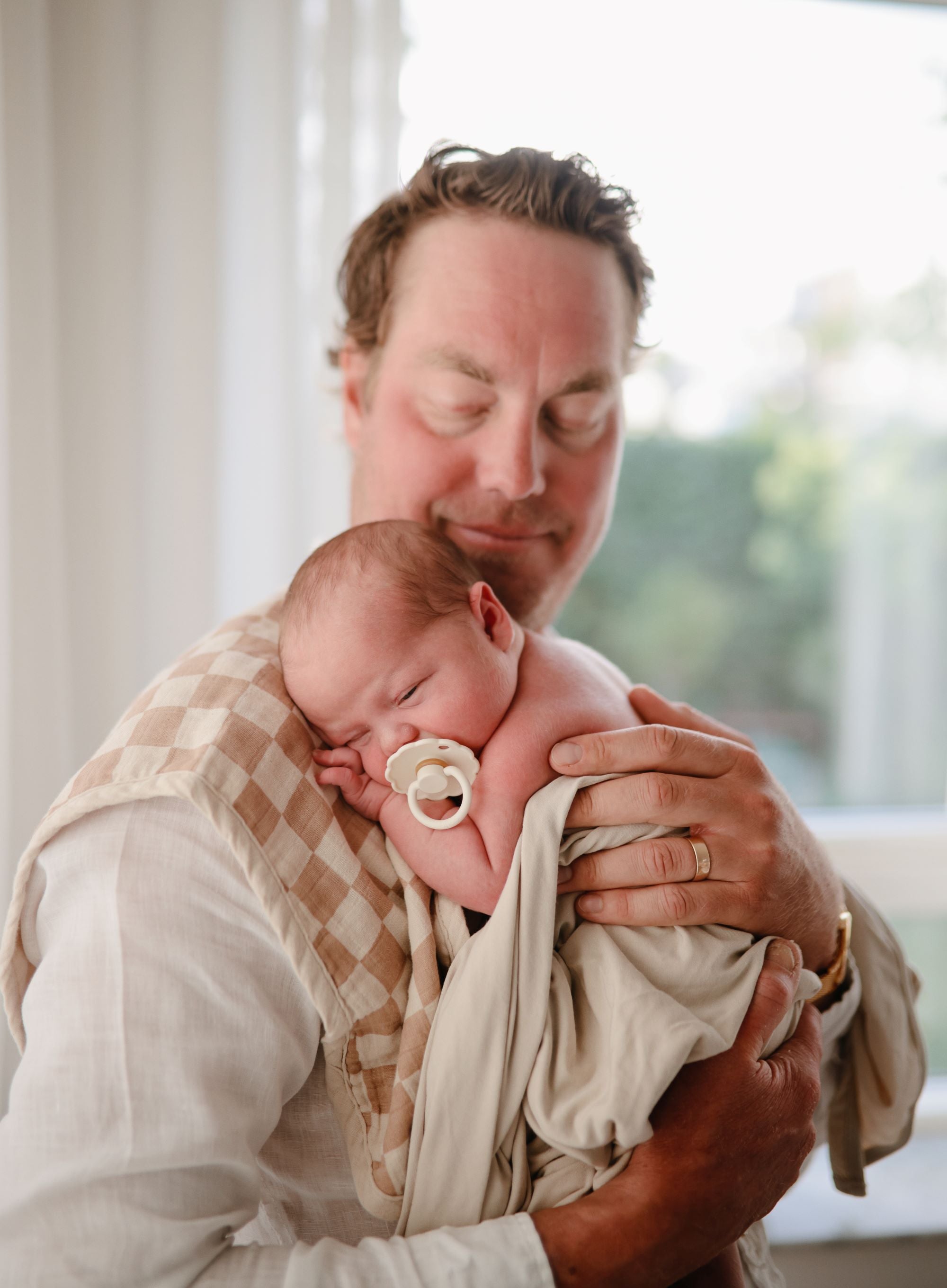
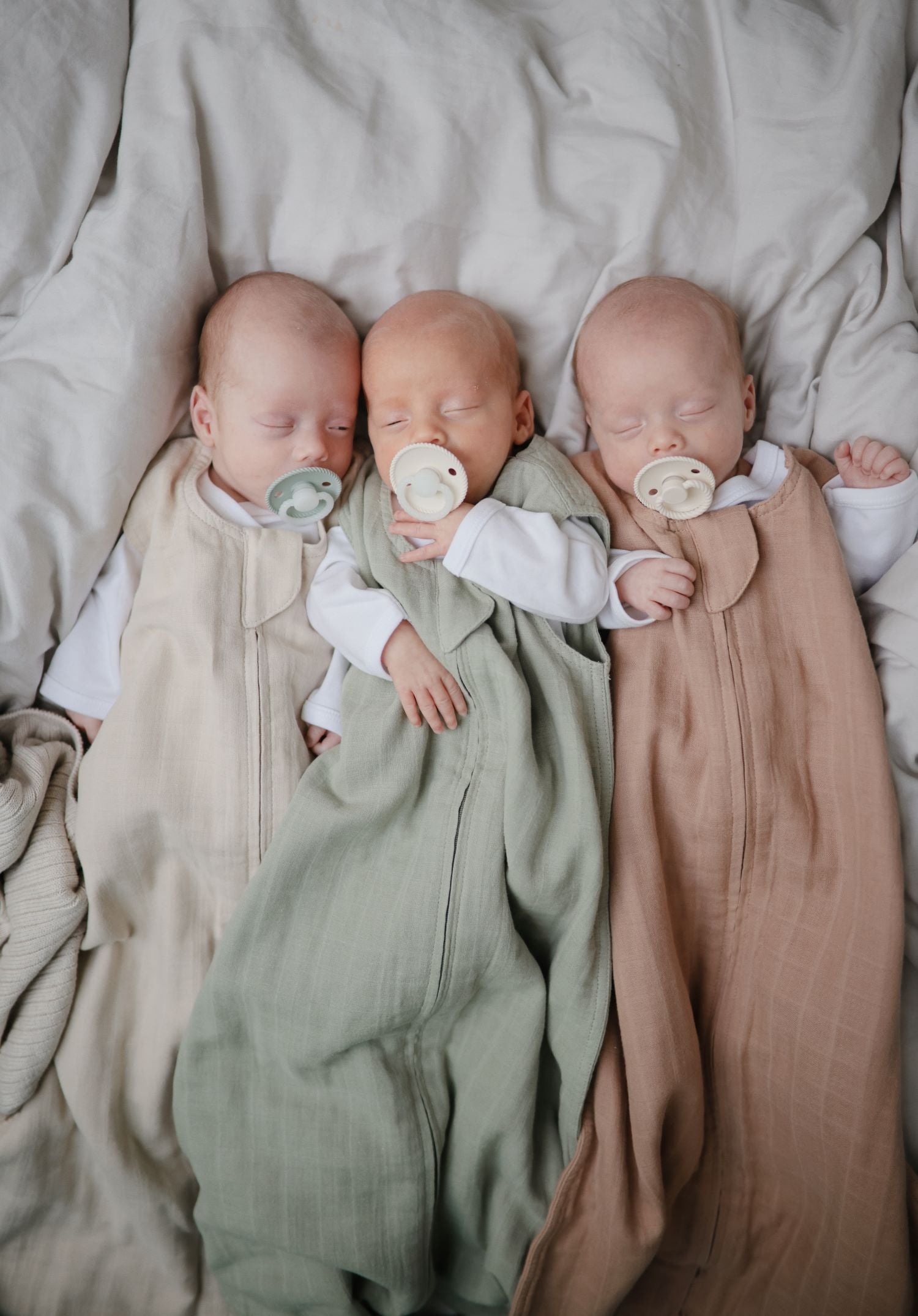
Swaddling may help some newborns feel calmer, but there comes a point when emerging motor skills change the safety equation. The key isn't waiting for a particular age—it's noticing what your baby's body is beginning to do.
During those early newborn weeks, swaddling can quickly become part of the rhythm of family life.
Feed.
Change.
Swaddle.
Settle.
Sleep—hopefully.
For some babies, having their arms contained seems to make settling easier. The sudden movements that once startled them awake become less disruptive, and after many unpredictable nights, the swaddle may feel like one of the few things that reliably helps.
Then something changes.
Your baby becomes stronger.
Their movements become more purposeful.
Perhaps their hips begin twisting to one side.
Perhaps their whole body seems increasingly determined to move.
And one day you find yourself wondering:
“Are they trying to roll?”
That's when the question about swaddling changes.
It is no longer simply:
"Does the swaddle still help my baby sleep?"
It becomes:
"Is swaddling still appropriate for what my baby's body can do now?"
Because the swaddle hasn't suddenly become "bad."
Your baby is developing.
And as their abilities change, their sleep environment needs to change with them.
So, When Should You Stop Swaddling?
Parents are often given an age.
Two months.
Three months.
Four months.
But infant development doesn't unfold neatly according to calendar dates.
Some babies begin showing signs of attempting to roll earlier than others.
That's why the more important safety cue is emerging ability, rather than waiting for a particular monthly milestone.
The key principle is:
Stop using an arms-restricting swaddle when your baby begins showing signs of trying to roll.
You don't need to wait until your baby completes their first successful roll.
Those early attempts matter.
Once a swaddled baby is capable of changing position, restricted arms can interfere with their ability to move naturally.
This is the point when something that may previously have supported settling no longer fits the same developmental stage.
Why Does Rolling Change the Safety Picture?
A newborn's movements are very different from those of an older infant.
Early movements are influenced heavily by reflexes.
One of the most familiar is the Moro, or startle, reflex.
A sudden sound, movement, or change in position can cause a newborn's arms to extend abruptly before coming back toward the body.
Sometimes that movement wakes them.
Containing the arms through swaddling can reduce those movements, which is one reason some newborns appear easier to settle when swaddled.
But newborn reflexes don't remain unchanged.
Over the following weeks and months, something remarkable begins to happen.
Head and neck control develops.
Shoulders become more active.
Hips begin rotating.
Movements become increasingly intentional.
Your baby starts discovering what their body can do.
Eventually, that exploration begins to include rolling.
And once that ability starts emerging, freedom of movement becomes increasingly important.
Don't Wait for the First Successful Roll
Rolling doesn't always arrive as a perfectly obvious milestone.
There may not be a clear dividing line between:
"My baby can't roll."
and
"My baby can roll."
Before a successful roll happens, you may notice subtler changes.
Your baby may begin:
- leaning or shifting their body repeatedly toward one side;
- rotating their hips more strongly;
- moving their shoulders and torso with increasing purpose;
- or making repeated movements that appear to be attempts to turn.
None of these observations can tell you exactly when the first successful roll will happen.
And that's precisely why waiting for certainty isn't necessary.
For sleep safety, it makes more sense to respond to mobility as it begins to emerge, rather than waiting until your baby demonstrates the completed skill.
If you believe your baby is beginning to attempt rolling, it's time to move away from swaddling that restricts the arms.
But the Moro Reflex Is Still There
This is where many parents understandably become confused.
If swaddling helped because of the startle reflex, shouldn't you continue until that reflex disappears?
Not necessarily.
Different aspects of development overlap.
The Moro reflex may still be present while your baby is simultaneously gaining greater control over their head, shoulders, hips, and torso.
In other words:
the startle reflex doesn't need to disappear before new motor abilities begin.
So the question isn't:
"Has the Moro reflex completely gone?"
The more useful question is:
"Has my baby's emerging mobility changed what is appropriate for sleep?"
If signs of attempting to roll are appearing, don't delay the transition simply because your baby still startles.
Safety takes priority over preserving the sleep effect the swaddle once provided.
What If My Baby Is Still Very Young?
This can feel particularly surprising when signs of increased mobility appear earlier than expected.
You might think:
"Surely they're too young to stop swaddling?"
But milestones don't read calendars.
Babies develop at different rates.
Age can still provide useful developmental context, and safe-sleep guidance should always be taken seriously. But a calendar shouldn't persuade you to ignore a capability you're already seeing.
If you're unsure whether your baby's movements represent attempts to roll, talk with your pediatrician or another qualified healthcare professional who knows your baby.
When sleep safety is involved, there is no benefit in trying to keep a baby swaddled for as long as possible.
The Developmental Shift
This is the central idea of the article:
A sleep practice can be appropriate during one developmental stage and need to change during the next.
That doesn't mean the earlier choice was wrong.
The baby changed.
The environment now needs to catch up.
And this distinction matters because parenting advice can sometimes make transitions sound like failures:
"The swaddle worked, and now we have to give it up."
A development-first perspective tells a different story:
"The swaddle served its purpose. Now my baby's body needs something different."
That small shift can make the transition feel less like losing a sleep solution—and more like responding to growth.
How Do You Transition Out of the Swaddle?
Once your baby begins showing signs of attempting to roll, the safety priority is clear:
Their arms need to be free during sleep.
But that doesn't mean everything familiar about bedtime needs to disappear at once.
You can still keep the parts of the routine that help signal that sleep is approaching.
Dim the lights.
Lower the activity around the house.
Feed your baby according to their needs.
Hold them close.
Sing the same familiar song.
Use the same gentle sequence you've been following before sleep.
The swaddle may need to change.
Your presence doesn't.
For a baby who has spent weeks sleeping with their arms contained, that continuity can make the transition feel a little more familiar.
What About the “One Arm Out” Method?
You may come across advice suggesting a gradual transition:
one arm out for several nights,
then both arms free.
For babies who haven't begun showing signs of attempting to roll, some families choose a gradual approach as they prepare to move away from swaddling.
But once signs of attempting to roll have appeared, don't prolong an arms-restricting swaddle simply to complete a gradual transition.
At that point, the priority has changed.
The goal is no longer to make the transition as seamless as possible.
It is to give your baby the freedom of movement that their developing body now requires.
What Can Your Baby Wear After Swaddling?
Moving away from swaddling doesn't mean your baby can't wear appropriate sleep clothing.
A properly fitted, non-weighted, arms-free sleep sack or wearable blanket may be one option.
The distinction matters.
A traditional swaddle contains the arms.
An arms-free sleep sack allows them to move naturally.
And when choosing any sleep product, look beyond its marketing name.
Products may be labelled:
"transition swaddle,"
"sleep suit,"
"sleep system,"
or something entirely different.
The name doesn't determine whether a product is appropriate for your baby's developmental stage.
Ask instead:
Are both arms completely free?
Can my baby move naturally?
Is the product properly fitted?
Does it add unnecessary weight or restriction to the body?
And always use infant sleepwear according to current safety guidance and the manufacturer's instructions.
What About Weighted Sleep Products?
Products that add weight or pressure may be marketed as helping babies feel secure or recreating the sensation of being held.
For infant sleep, however, a precautionary approach points in another direction.
Avoid weighted swaddles, weighted sleep sacks, weighted blankets, and other sleep products that add weight to a baby's body.
Your baby doesn't need additional weight to make the transition away from swaddling.
If they need more support while adjusting, return to simpler things:
a familiar bedtime rhythm;
appropriate clothing for the room temperature;
holding and comforting before sleep;
and responding when your baby needs you.
A developmental transition doesn't need to be replaced by a more complicated sleep product.
Don't Replace the Swaddle With Something More Restrictive
When sleep becomes more unsettled after removing the swaddle, it's understandable to want something that recreates that contained feeling.
But avoid trying to limit your baby's movement with other objects in the sleep space.
That means not adding things such as:
pillows,
rolled blankets,
sleep positioners,
crib bumpers,
nests or pods,
or soft objects intended to keep your baby in one position.
Emerging movement isn't a problem that needs to be physically prevented.
It is a developmental change that the sleep environment needs to accommodate.
As babies become more mobile, the safest sleep space often becomes simpler—not more elaborate.
What If My Baby Rolls During Sleep?
Continue placing your baby on their back at the beginning of every sleep.
Don't use positioners or other objects to hold them in place.
As rolling ability begins to emerge, the priorities become especially clear:
your baby should no longer be swaddled;
their arms should be free;
and their sleep space should remain firm, flat, and free from loose or soft objects.
We can't stop babies from developing new motor skills.
What we can do is make sure their sleep environment is ready when those skills arrive.
“My Baby Sleeps Worse Without the Swaddle”
This may be the hardest part.
The first few nights can feel very different.
Your baby may wave their arms.
Touch their face.
Move more.
Wake more often.
Need more help settling.
And when the entire family is already tired, even a temporary disruption can feel enormous.
But a difficult adjustment doesn't mean stopping the swaddle was the wrong decision.
Your baby is learning what sleep feels like with a body that has more freedom to move.
You don't need to rush them toward independent sleep simply because the swaddle is gone.
You can still comfort them.
Hold them.
Feed them when they're hungry.
Respond when they call for you.
Keep familiar parts of bedtime consistent.
Transitioning out of the swaddle is not a test of whether your baby can sleep without your help.
It is a safety transition that follows development.
The Whole Family May Feel the Transition
Changes in infant sleep rarely affect only the baby.
Parents may lose some of the predictability they had finally begun to find.
Older siblings may wake when the baby cries more frequently.
And in multigenerational households, grandparents or other relatives may understandably wonder why you're giving up something that seemed to work so well.
Someone may even suggest:
"Just swaddle the baby again. They slept much better that way."
This is where understanding the why behind the transition can help.
The swaddle wasn't necessarily wrong before.
And previous caregivers weren't necessarily wrong for finding it useful.
The situation has changed because the baby has changed.
Explaining the transition through development rather than blame can make it easier for everyone caring for the baby to follow the same approach.
Mummasphere Family Habit
As your baby reaches new milestones, periodically look at their sleep environment with fresh eyes.
Instead of asking only:
"What helps my baby sleep the longest?"
also ask:
"Does the way my baby sleeps still match what their body can do now?"
Look at the things that once felt essential.
Does your baby now need their arms free?
Does their sleepwear still allow natural movement?
Is there anything in the sleep space that no longer needs to be there?
Do the other people who care for your baby know that something has changed?
Development happens quickly.
A sleep environment that was appropriate several weeks ago may need to evolve today.
Safe Sleep Continues After the Swaddle
Stopping swaddling isn't the end of the safe-sleep conversation.
As motor abilities develop, the fundamentals remain important.
Start every sleep by placing your baby on their back.
Use a firm, flat sleep surface.
Keep pillows, loose blankets, bumpers, stuffed toys, positioners, and other unnecessary soft objects out of the sleep space.
Avoid weighted infant sleep products.
And once your baby begins showing signs of attempting to roll, don't return to an arms-restricting swaddle simply because they seemed to sleep better in it.
Sleep may temporarily become less predictable. Safety doesn't become less important.
Key Takeaways
Before you leave, remember these five ideas:
- Don't wait for the first successful roll. Signs that your baby is beginning to attempt rolling are the cue to move away from an arms-restricting swaddle.
- Don't wait for the Moro reflex to disappear. Motor development can progress while the startle reflex is still present.
- Development matters more than relying on a single age alone. Pay attention to the baby in front of you.
- A temporary change in sleep doesn't mean the transition has failed. Your baby may need time—and more support from you—while adjusting.
- After swaddling, keep sleep simple. Both arms should be free as mobility emerges, and the sleep environment should remain appropriate for safe infant sleep.
Read Next
As families move away from swaddling, another common sleep question often appears:
What about a pacifier?
Unlike many infant sleep products, pacifiers come with an interesting evidence picture involving sleep, soothing, safe-sleep recommendations, breastfeeding considerations, and individual preference.
In the next article, we'll explore:
Pacifiers and Baby Sleep: Benefits, Risks, and Safe Use
Not to decide whether every baby should use one, but to help you understand the evidence and decide what makes sense for your baby and family.
Mummasphere Perspective
For a while, the swaddle may have felt like one of those rare things that simply worked.
You wrapped your tiny newborn.
Their movements became quieter.
Perhaps their eyes finally closed.
And for a little while, the house became quieter too.
Then their body began to change.
Those tiny arms became more active.
Their shoulders grew stronger.
Their hips began to turn.
The newborn who once seemed content to stay exactly where you placed them started discovering that their body could take them somewhere new.
Letting go of the swaddle doesn't mean taking security away from your baby.
It means making room for what their body is learning to do next.
Sleep may not immediately look the same.
You may hold them a little longer.
You may respond a little more often.
Your household may need a few nights—or longer—to find its new rhythm.
It's okay for a transition to feel like a transition.
Babies keep asking families to adapt because babies themselves never stop developing.
Something that helped yesterday doesn't need to be preserved simply because it once worked.
At Mummasphere, we believe caring for a growing baby isn't about discovering one perfect routine and holding onto it for as long as possible.
It's about noticing.
Recognising when needs and abilities change.
And being willing to change with them.
A good sleep environment isn't one that never changes. It's one that continues to adapt alongside the baby growing within it.
Explore Your Newborn's Sleep
If you're wondering why your newborn's sleep feels so unpredictable
→ Newborn Sleep Patterns: What Parents Need to Know
If your baby grunts, twitches, moves, or makes noises while sleeping
→ Active Sleep in Newborns: Why Babies Move and Make Noise
If naps seem frustratingly short
→ Why Does My Newborn Take Such Short Naps?
If you're wondering when day and night begin to make sense
→ How Light and Darkness Help Babies Learn Day From Night
If you're considering adding sound to the sleep environment
→ White Noise for Babies: What the Evidence Says
If you're deciding whether a pacifier fits your baby's needs
→ Pacifiers and Baby Sleep