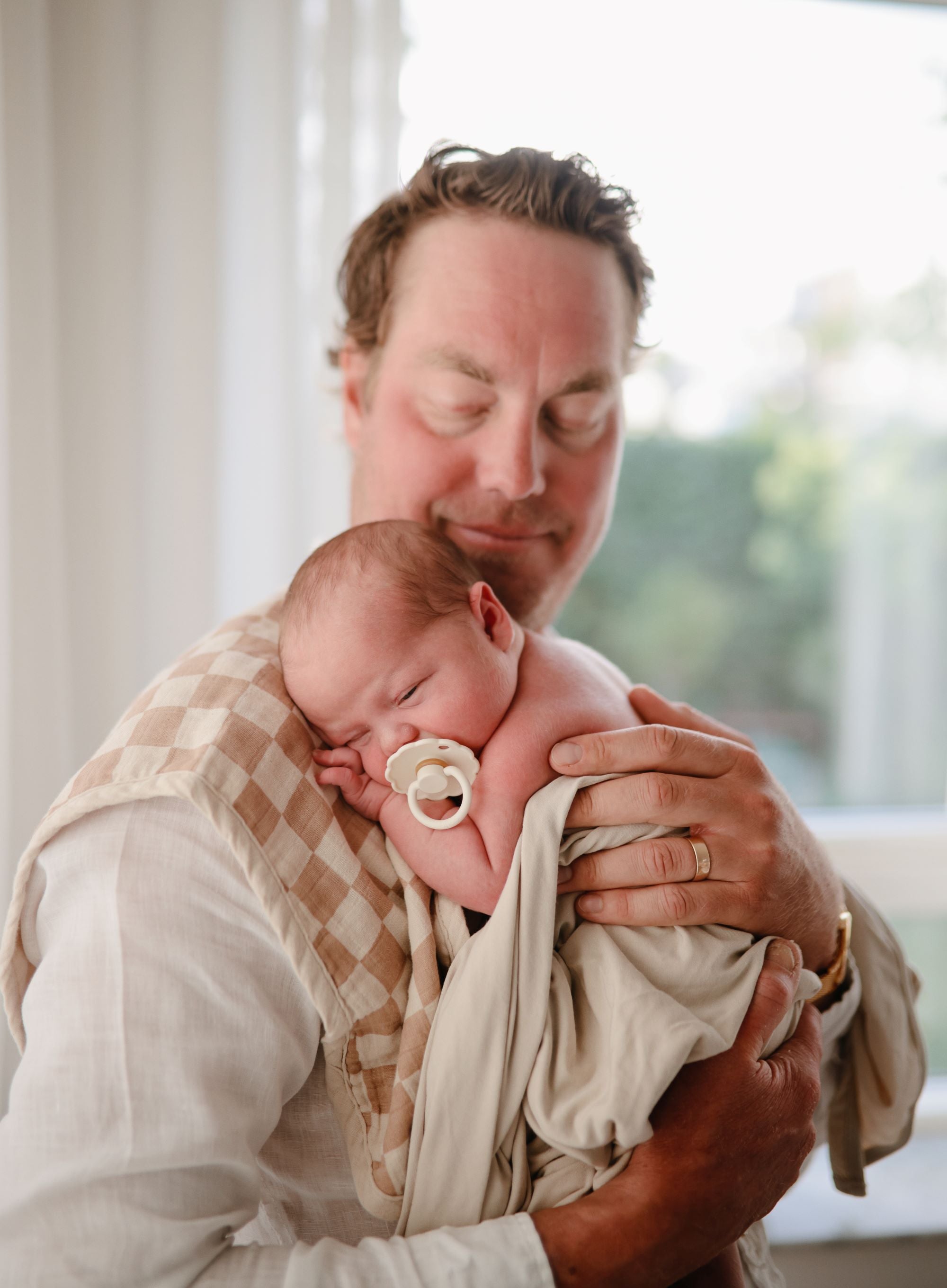
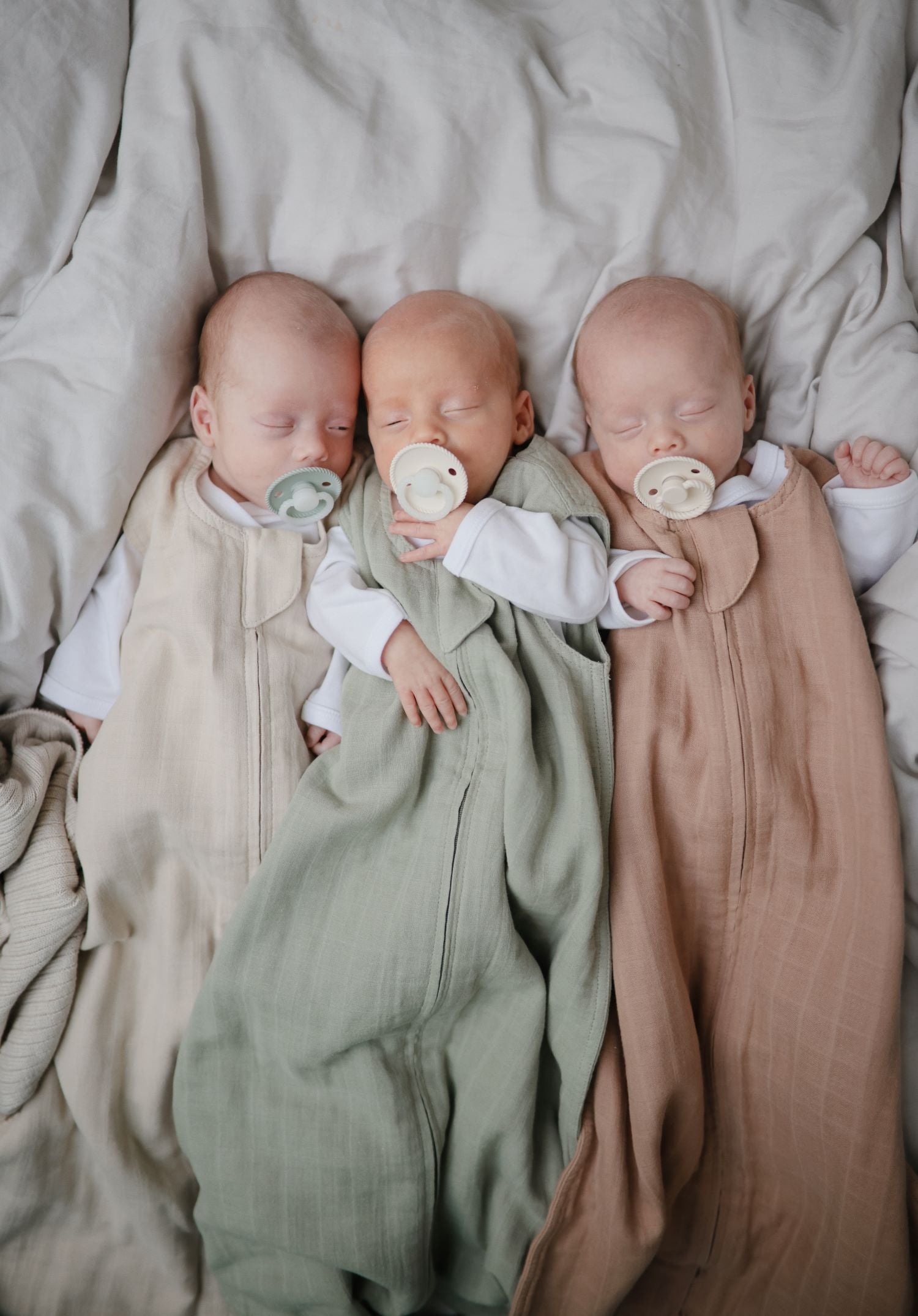
Newborns often smile, twitch, stretch, grunt, or briefly open their eyes while sleeping. Although these movements can surprise new parents, they are usually a normal part of early sleep development.
It's 1:40 a.m.
Your baby has finally fallen asleep.
You quietly walk over to the bassinet for one last look before heading back to bed.
Then it happens.
A tiny smile appears.
Their eyebrows wrinkle.
One arm twitches.
Their legs stretch.
A soft little grunt escapes.
For a brief moment, their eyes seem to open.
You immediately wonder,
"Are they waking up already?"
But within a few seconds, everything settles again.
Your baby never actually wakes.
If you've ever watched your newborn sleep and felt unsure about what you were seeing, you're in good company.
Many parents assume these movements mean their baby is sleeping lightly or struggling to stay asleep.
In reality, they are often witnessing active sleep—a completely normal stage of newborn sleep that plays an important role in early development.
Why Do Newborns Move So Much While They Sleep?
When adults sleep, our bodies are usually quite still.
That's why newborn sleep can seem so surprising.
During the first weeks of life, babies spend much of their sleep in active sleep, a stage that naturally includes movement.
You might notice your baby:
- gently moving their arms or legs,
- changing facial expressions,
- smiling briefly,
- making sucking motions,
- grunting softly,
- breathing with slight variations,
- or even opening their eyes for a moment before settling again.
To exhausted parents, these movements can easily look like signs that a baby is waking.
Most of the time, however, your baby is still asleep.
What Is Active Sleep?
Newborn sleep is broadly made up of two main sleep states:
- Active sleep
- Quiet sleep
During active sleep, the brain remains highly active while the body rests.
Because the nervous system is still developing, babies often move much more than adults do during sleep.
This is why you may see:
- small body movements,
- facial expressions,
- gentle stretching,
- sucking motions,
- brief vocal sounds,
- or short periods when the eyes partially open.
Although it looks busy, active sleep is still sleep.
Your baby isn't necessarily waking up.
They're simply moving through a completely normal stage of their sleep cycle.
Why Is Active Sleep So Important?
Active sleep isn't a sign of restless sleep.
In fact, researchers believe it plays an important role in healthy brain development during early infancy.
During the newborn period, the brain is growing and organising itself at an extraordinary pace.
While babies sleep, their nervous system continues to mature.
This is one reason newborns spend a much larger proportion of their sleep in active sleep than older children or adults.
As babies grow, their sleep gradually changes.
Quiet sleep becomes longer.
Movements become less frequent.
Sleep becomes more organised over time.
Not because babies are learning to "sleep properly,"
but because their brains and nervous systems are naturally maturing.
Why Parents Often Think Their Baby Is Awake
One of the most common misunderstandings about newborn sleep is assuming that movement always means wakefulness.
That assumption makes sense.
Adults rarely smile, twitch, grunt, or stretch while sleeping.
So when babies do these things, our instinct is to step in immediately.
Yet many of these behaviours happen while babies remain asleep.
Sometimes they're simply moving between different sleep states.
Watching quietly for a few extra moments often helps parents recognise the difference between active sleep and genuine wakefulness.
Of course, if your baby begins crying, shows clear feeding cues, or appears uncomfortable, responding to those needs is absolutely appropriate.
The goal isn't to delay comfort.
The goal is to understand what your baby is communicating before assuming they're awake.
When Is It Better to Watch, and When Should You Respond?
After learning about active sleep, many parents ask:
"Should I wait, or should I pick my baby up right away?"
The answer depends on what your baby is actually telling you.
If your baby is:
- gently stretching,
- making a few small sounds,
- briefly opening their eyes,
- or moving their arms and legs without crying,
they may still be asleep.
Giving yourself a few moments to observe can often prevent accidentally waking a baby who is naturally moving between sleep states.
On the other hand, if your baby begins crying, appears hungry, or clearly needs comfort, responding promptly remains the right approach.
This isn't about ignoring your baby.
It's about learning to recognise the difference between movement during sleep and genuine wakefulness.
Why Waiting for a Moment Doesn't Mean Ignoring Your Baby
Some parents feel uncomfortable when they hear advice to "wait and see."
It can sound as though they're being told to ignore their baby.
But these are two very different things.
Pausing for a few moments isn't about withholding comfort.
It's about giving yourself a chance to understand what your baby is doing.
Sometimes, a newborn who grunts, stretches, or briefly opens their eyes is simply moving through active sleep.
Within seconds, they settle naturally and continue sleeping.
If your baby begins crying, shows clear hunger cues, or appears distressed, responding promptly remains the right choice.
Observation is never a substitute for responsiveness.
Instead, it helps parents respond more accurately to what their baby is actually communicating.
Why Do Newborns Spend So Much Time in Active Sleep?
One of the most surprising things about newborn sleep is how active it appears.
Compared with adults, newborns spend a much larger proportion of their sleep in active sleep.
This isn't a flaw in their sleep.
It's a feature of early development.
As the brain and nervous system mature, sleep architecture gradually changes.
Over time:
- periods of quiet sleep become longer,
- movements during sleep become less frequent,
- and sleep becomes more organised.
These changes happen gradually.
Not because babies are being trained to sleep differently,
but because their bodies are becoming ready for more mature sleep patterns.
Once again, sleep development follows biology—not a fixed schedule.
Common Myths About Active Sleep
Because newborn sleep looks so different from adult sleep, several myths continue to circulate among families.
Let's look at a few of the most common ones.
"If my baby moves a lot, they aren't sleeping well."
Not necessarily.
Movement is often a normal feature of active sleep during the newborn period.
"If my baby smiles during sleep, they must be dreaming."
We don't yet know exactly what newborn smiles during sleep represent.
While dreaming is a popular explanation, current evidence doesn't allow us to say this with certainty.
They are more likely related to normal neurological activity during early development.
"If my baby's eyes open, they're awake."
Not always.
Some babies briefly open their eyes during transitions between sleep states before settling back into sleep.
Opening the eyes alone doesn't necessarily mean your baby is awake.
When Should Parents Seek Medical Advice?
Most movements during newborn sleep are completely normal.
However, some situations deserve medical assessment.
Speak with your baby's healthcare provider if:
- movements appear repetitive in exactly the same pattern and don't stop when your baby is awake;
- movements are accompanied by breathing difficulties;
- your baby's skin changes colour, such as becoming blue or very pale;
- your baby is unusually difficult to wake;
- or something simply feels different from your baby's usual behaviour.
Parents know their babies remarkably well.
If your instincts tell you something isn't right, it's always appropriate to seek professional advice.
Mummasphere Family Habit
Tonight, try one small change.
The next time your baby moves, stretches, or makes a soft sound while sleeping, pause for a moment before assuming they're awake.
Ask yourself:
- Are their eyes truly open?
- Are they crying, or simply making a brief sound?
- Do they seem to be searching for a feed?
- Or do they settle again after a few seconds?
Over time, these small observations can help you recognise the difference between active sleep and genuine wakefulness.
Often, the biggest change isn't that your baby sleeps differently.
It's that you begin to understand their sleep with greater confidence.
professional advice.
What Matters Most
If there's one thing we hope you take away from this article, it's this:
Not every movement during sleep means your baby is awake.
Tiny stretches.
Brief smiles.
Soft grunts.
A momentary eye opening.
These behaviours often look far more dramatic than they really are.
For newborns, they are frequently part of active sleep—a completely normal stage of healthy sleep development.
The more familiar you become with these patterns, the easier it becomes to recognise when your baby truly needs you and when they're simply moving through a normal sleep cycle.
That understanding may not make your baby sleep longer tonight.
But it can make the night feel a little less uncertain.
Mummasphere Family Habit
Tonight, instead of asking,
"Why is my baby moving so much?"
Try asking a different question.
"What might my baby be telling me?"
Watch quietly for a few moments.
Notice whether your baby:
- settles again without fully waking;
- begins crying or showing feeding cues;
- appears calm despite moving;
- or naturally transitions into quieter sleep.
Over time, you'll start recognising your baby's own sleep patterns.
And that growing understanding often becomes one of the most valuable parenting skills of all.
Key Takeaways
Before you leave, here are the ideas we hope stay with you:
- Active sleep is a normal and healthy part of newborn sleep.
- Movement during sleep doesn't necessarily mean your baby is awake.
- Smiles, stretches, small sounds, and brief eye opening are often expected during active sleep.
- Taking a moment to observe can help you distinguish active sleep from genuine wakefulness.
- As babies grow, active sleep gradually becomes less dominant as sleep matures.
- If movements seem unusual, repetitive, or are accompanied by breathing difficulties or colour changes, seek medical advice.
Read Next
Now that you understand why newborns often move while they sleep, you may find yourself asking another common question:
"If active sleep is normal, why does my baby only nap for 20 or 30 minutes?"
That's exactly what we'll explore in the next article:
Why Does My Newborn Take Short Naps? Understanding Nap Length Through Development
Together, these articles build a clearer picture of how newborn sleep gradually develops during the first months of life.
Mummasphere Perspective
Watching a newborn sleep can be surprisingly emotional.
Every little movement seems important.
Every sound makes you wonder whether they're about to wake.
Every stretch invites another question.
Yet many of these moments aren't signs that something is wrong.
They're signs that your baby's sleep is doing exactly what it's designed to do.
At Mummasphere, we believe that understanding infant sleep begins with recognising that newborns aren't simply smaller versions of adults.
Their sleep looks different because their brains, bodies, and nervous systems are developing at an extraordinary pace.
Our goal isn't to help parents worry less by dismissing their concerns.
Our goal is to help them worry less because they understand what they're seeing.
Because confidence doesn't come from knowing every answer.
It grows from learning how to observe, understand, and respond with patience as your baby develops.
Explore Your Newborn's Sleep
If you're wondering why your newborn's sleep feels so unpredictable
→ Newborn Sleep Patterns: What Parents Need to Know
If naps seem frustratingly short
→ Why Does My Newborn Take Such Short Naps?
If you're wondering when day and night begin to make sense
→ How Light and Darkness Help Babies Learn Day From Night
If you're considering adding sound to the sleep environment
→ White Noise for Babies: What the Evidence Says
If your baby is becoming more mobile while still swaddled
→ When Should You Stop Swaddling Your Baby?
If you're deciding whether a pacifier fits your baby's needs
→ Pacifiers and Baby Sleep