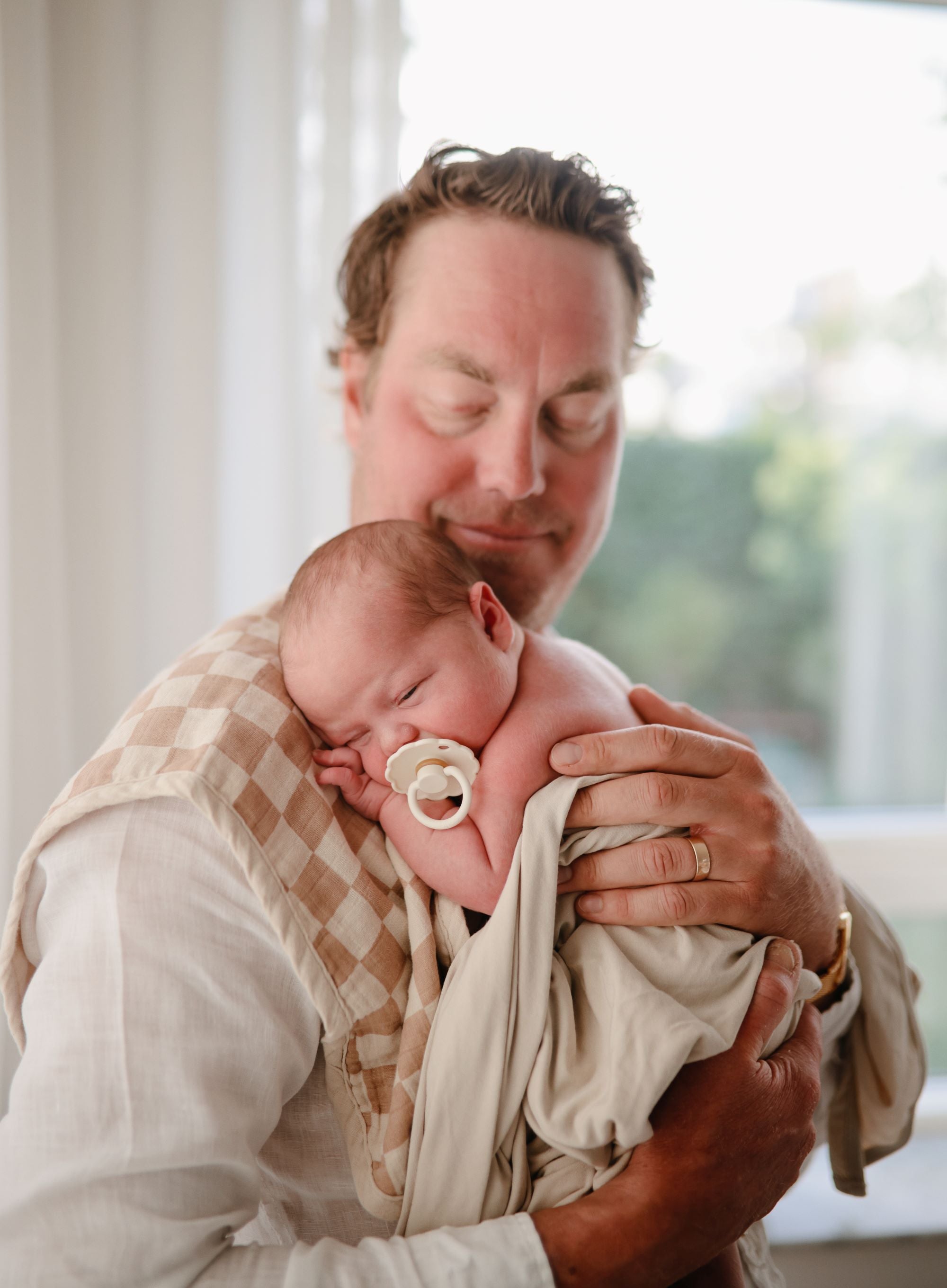
Many newborns wake after just 20 to 30 minutes of daytime sleep. Before wondering how to make naps longer, it helps to understand how infant sleep naturally develops during the first months of life.
Your baby has finally fallen asleep.
You gently place them in the bassinet.
The house is quiet again.
For the first time in hours, you think,
"Maybe I have enough time to eat lunch."
Or fold a load of laundry.
Or simply sit down for a few minutes.
Then you hear a sound.
Your baby is awake.
You check the clock.
Twenty-five minutes.
Again.
If this happens in your home, you're far from alone.
Short naps are one of the most common reasons parents worry during the newborn months.
Many begin wondering whether their baby isn't sleeping well.
Others worry they're doing something wrong.
In reality, short naps are often a normal part of early sleep development.
Before looking for ways to make naps longer, it helps to understand why they happen in the first place.
The Bigger Question: Why Do Newborns Wake After Just One Short Nap?
To adults, a 20-minute nap can feel incomplete.
Surely a baby couldn't have had enough sleep in such a short time.
But newborn sleep doesn't work like adult sleep.
During the first months of life, babies move through relatively short sleep cycles.
At the end of each cycle, they naturally enter a brief transition before either drifting into another cycle or waking completely.
Some babies make this transition smoothly.
Others wake soon after their first sleep cycle ends.
The ability to connect one sleep cycle to the next isn't something babies are born knowing how to do.
It's a developmental skill that gradually matures over time.
In other words, a short nap doesn't necessarily mean your baby wasn't tired.
More often, it reflects a sleep system that is still developing.
Short Naps Don't Always Mean Something Is Wrong
One of the biggest misconceptions about newborn sleep is that every short nap is a problem that needs to be fixed.
Many healthy newborns naturally take several shorter naps throughout the day.
As the brain and nervous system mature, sleep gradually becomes more organised.
Sleep cycles lengthen.
Transitions become smoother.
Longer naps often appear naturally as part of this developmental process.
Rather than asking,
"How do I stop these short naps?"
it can be more helpful to ask,
"What is my baby's sleep learning to do?"
That small shift in perspective changes the entire conversation.
How Babies Learn to Connect Sleep Cycles
Each sleep cycle ends with a brief transition.
During this time, your baby may:
- stir slightly,
- stretch,
- make a soft sound,
- briefly open their eyes,
- or change position.
Some babies move through this transition without fully waking.
Others wake completely.
Neither response means they're sleeping "well" or "poorly."
It simply reflects where they are in their sleep development.
As babies grow, many gradually become better able to connect one sleep cycle to the next, allowing naps to become longer over time.
Why Waiting Isn't the Same as Ignoring
Parents sometimes hear advice to "pause before responding" when a baby stirs after a short nap.
Understandably, that advice can feel uncomfortable.
But pausing isn't about ignoring your baby.
It's about observing what happens next.
Sometimes a baby who briefly stirs is simply transitioning between sleep cycles and settles back to sleep on their own.
Other times, they are fully awake and ready to feed, connect, or be comforted.
The goal isn't to delay responding.
The goal is to understand what your baby is communicating before assuming the nap has ended.
Why Can't Newborns Always Connect Sleep Cycles?
Every sleep cycle ends with a brief transition.
For adults, these transitions usually happen without us noticing.
We may shift position, adjust a blanket, or briefly become more aware before drifting into the next sleep cycle.
By morning, we rarely remember any of it.
Newborns experience these transitions differently.
Because their brains and nervous systems are still developing, moving from one sleep cycle to the next isn't always seamless.
Some babies naturally settle into another cycle.
Others wake completely.
This isn't because they're poor sleepers.
It's because the ability to connect sleep cycles develops gradually during infancy.
As babies grow, these transitions often become smoother, and naps naturally begin to lengthen.
Can Parents Help Their Baby Take Longer Naps?
This is one of the questions parents ask most often.
The answer isn't a simple yes or no.
Parents can't speed up the biological maturation of their baby's sleep.
What they can do is create an environment that supports healthy sleep development.
That may include:
- recognising early sleep cues before a baby becomes overtired;
- keeping the sleep environment calm, safe, and comfortable;
- exposing babies to natural daylight during the day and a darker environment at night;
- and following soothing routines that fit the family's daily rhythm.
None of these strategies guarantee longer naps.
Instead, they help support healthy sleep as a baby's brain and nervous system continue to mature.
The goal isn't to force longer sleep.
It's to support development as it unfolds.
Why Wake Windows Are Only Part of the Picture
In recent years, wake windows have become one of the most popular topics in infant sleep advice.
They can certainly be useful as a general guide.
But they aren't a universal rule.
Two babies of the same age may become sleepy at different times.
Some babies naturally stay awake a little longer.
Others need sleep sooner.
Rather than relying only on the clock, it's equally important to watch your baby's own sleep cues.
Yawning.
A quieter gaze.
Slower movements.
Less interest in interaction.
These signs often tell you more about your baby's readiness for sleep than a schedule alone.
Wake windows can support observation.
They shouldn't replace it.
When Should Short Naps Be Discussed with a Healthcare Professional?
For most newborns, short naps are simply part of normal development.
However, it's worth speaking with your baby's healthcare provider if:
- naps remain consistently very short and your baby seems unusually distressed afterwards;
- sleep difficulties are accompanied by poor feeding or concerns about growth;
- your baby appears persistently exhausted but struggles to stay asleep;
- or your baby's sleep pattern changes suddenly without an obvious reason.
The purpose of seeking advice isn't to find fault.
It's to ensure your baby's overall health and development are progressing as expected.
Mummasphere Family Habit
The next time your baby wakes after a short nap, try replacing one question with another.
Instead of asking,
"Why did my baby wake so quickly?"
Try asking,
"What might this short nap be telling me about my baby's stage of development?"
Observe for a moment.
Does your baby seem refreshed?
Are they still showing sleepy cues?
Did they wake calmly, or are they signalling hunger or discomfort?
Over time, these small observations often become more valuable than focusing on the length of a single nap.
Looking Beyond the Length of a Nap
When you're caring for a newborn, it's easy to measure sleep by the clock.
Twenty minutes.
Thirty minutes.
Forty-five minutes.
Longer naps can feel like a success.
Short naps can feel like something went wrong.
But infant sleep isn't measured only by minutes.
It's measured by development.
During the newborn months, many babies are still learning how to move from one sleep cycle to the next.
That process takes time.
A short nap doesn't necessarily mean your baby slept poorly.
Nor does a long nap automatically mean everything is progressing "better."
Sleep is just one part of a much bigger picture.
How your baby feeds.
How they grow.
How they interact with the world.
And how their sleep gradually changes over weeks and months.
Those patterns often tell us much more than the length of a single nap.
Every Baby Develops at Their Own Pace
One of the hardest parts of parenting today is avoiding comparison.
You hear about another baby who naps for two hours.
You see a sleep schedule online that looks perfectly organised.
It's natural to wonder,
"Why isn't my baby doing that?"
But babies don't all follow the same timeline.
Even newborns of the same age can have very different sleep patterns.
Temperament.
Feeding.
Health.
Daily routines.
Family life.
All of these shape how sleep looks from one baby to another.
Rather than comparing your baby with someone else's, it can be more helpful to notice how your own baby changes over time.
Maybe they settle a little more easily than they did last month.
Maybe one nap occasionally becomes longer.
Maybe you're becoming more confident at recognising their sleepy cues.
Those small changes are often signs that development is moving forward—even if today's nap was only thirty minutes long.
Mummasphere Family Habit
This week, try observing your baby's naps a little differently.
Instead of recording only how long each nap lasts, also notice:
- How does your baby seem after waking?
- Do they appear content or still sleepy?
- How are they feeding throughout the day?
- Is their overall sleep pattern changing gradually over time?
Looking at these broader patterns often provides a clearer picture of sleep development than any single nap ever could.
Key Takeaways
Before you leave, here are the ideas we hope you'll remember:
- A 20–30 minute nap is often a normal newborn sleep cycle.
- The ability to connect sleep cycles develops gradually over time.
- Short naps don't necessarily mean your baby isn't sleeping well.
- Parents can support healthy sleep, but they can't rush biological development.
- Watching your baby's overall sleep patterns is usually more helpful than focusing on the length of a single nap.
Read Next
Now that you've learned why newborn naps are often short, another question naturally follows:
How do babies begin to tell the difference between day and night?
In the next article, we'll explore how light, darkness, and everyday routines gradually help shape your baby's internal body clock.
How Light and Darkness Help Shape Your Baby's Circadian Rhythm
Together, these articles build a development-first understanding of infant sleep—one stage at a time.
Mummasphere Perspective
One of the quietest moments of parenthood often comes just after a baby falls asleep.
It's also when the questions begin.
"Will this nap last?"
"Should I try to make it longer?"
"Am I doing something wrong?"
Sometimes, those questions come from exhaustion.
Sometimes, they come from love.
Often, they come from both.
At Mummasphere, we believe that understanding sleep begins long before trying to improve it.
A newborn's sleep isn't simply a habit waiting to be corrected.
It's a developmental process unfolding one day, one sleep cycle, and one milestone at a time.
Some naps will be short.
Some will surprise you by lasting longer.
Both can be part of healthy development.
Our hope isn't that parents stop wishing for longer naps.
It's that they gain the confidence to recognise when a short nap is simply another step in the remarkable journey of how babies learn to sleep.
Because confidence doesn't come from controlling every nap.
It grows from understanding the story each nap is telling.
Explore Your Newborn's Sleep
If you're wondering why your newborn's sleep feels so unpredictable
→ Newborn Sleep Patterns: What Parents Need to Know
If your baby grunts, twitches, moves, or makes noises while sleeping
→ Active Sleep in Newborns: Why Babies Move and Make Noise
If you're wondering when day and night begin to make sense
→ How Light and Darkness Help Babies Learn Day From Night
If you're considering adding sound to the sleep environment
→ White Noise for Babies: What the Evidence Says
If your baby is becoming more mobile while still swaddled
→ When Should You Stop Swaddling Your Baby?
If you're deciding whether a pacifier fits your baby's needs
→ Pacifiers and Baby Sleep